Menopause is a common cause of thinning hair
Menopause is one of the most common reasons women over 45 notice their hair thinning. The change is driven mainly by the fall in oestrogen and progesterone at this stage of life.
The thinning is usually gradual and spread across the scalp rather than sudden or patchy, so you might notice it first as a wider parting or a thinner ponytail when you tie your hair up. It’s common, and in most cases it can be managed. For the fuller picture, see menopausal hair loss treatment.
Thinning becomes more common with age. About one in four women — roughly 25% — show signs of female pattern hair loss by around 50, and the proportion rises in the years after menopause. One review reports that up to about half of postmenopausal women notice some thinning (international), so if you’re seeing it, you’re not alone.
Why falling oestrogen thins your hair
Oestrogen and progesterone help keep your hair in its active growth phase. As their levels drop during and after menopause, androgens — a group of hormones that includes DHT — come to have relatively more influence on your scalp. Androgens shorten the growth phase and gradually shrink the follicles, so each new strand grows finer and shorter than the one before.
Lower oestrogen affects the hair itself, too. You may find it becomes drier, more brittle and more prone to breakage — which can make the thinning look and feel more pronounced than the loss alone would suggest. In Singapore’s heat, if you also blow-dry or use heat tools often, fragile hair breaks more easily still.

What menopausal thinning looks like
Menopausal thinning is usually diffuse — it spreads fairly evenly across the top of your scalp rather than forming distinct bald spots. This even hair loss pattern is one of the clearest ways to distinguish it from the localised patches caused by other conditions.
You’ll most often notice one or more of these:
-
A parting that gradually looks wider
-
A ponytail that feels thinner or holds less volume
-
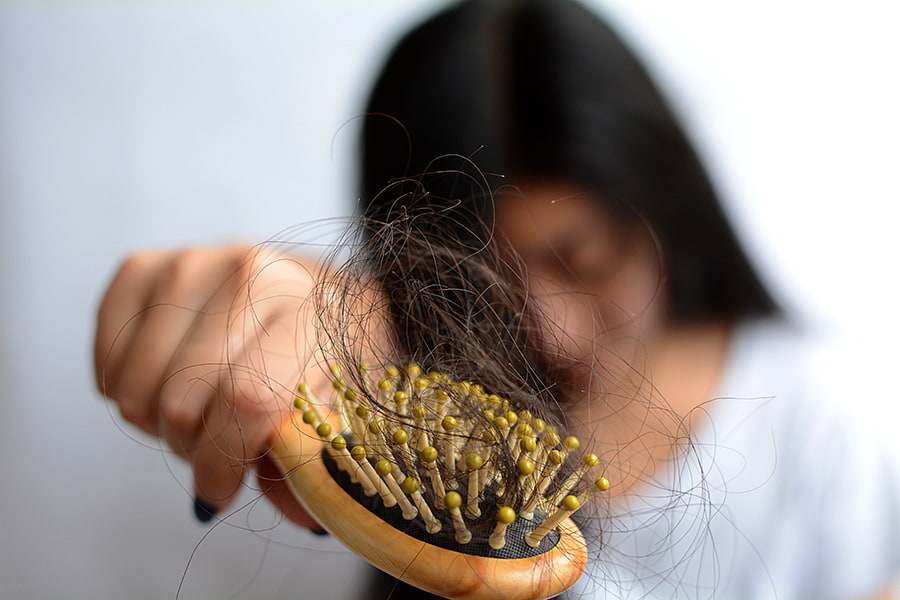
More strands than usual on the pillow, in the brush, or at the shower trap
-
Thinning that’s most noticeable at the crown and along the hairline
Your hairline may recede slightly at the temples, much like male pattern thinning. Complete bald patches are uncommon in menopausal thinning, though — if any appear, get them reviewed separately.
How much shedding is normal, and when to see a doctor
Some daily shedding is completely normal. Most people shed about 50 to 100 hairs a day, and that alone isn’t a sign of hair loss. It is only a cause of concern if the shedding increases and if more of your scalp becomes visible.
See a professional if you notice:
-
Sudden or rapid shedding rather than a slow, steady change
-
Distinct bald patches, or hair coming out in clumps
-
An itchy, painful, scaly or inflamed scalp
-
Thinning alongside other symptoms such as marked fatigue, which can point to a thyroid or nutritional cause
A doctor can examine your scalp and, where needed, arrange blood tests to identify or rule out an underlying cause.
Other causes that can add to the thinning
Menopause rarely acts alone. Several common factors overlap with the hormonal shift and worsen the thinning, which is part of why the cause isn’t always obvious:
-
Physical or emotional stress, which pushes more hairs into the shedding phase
-
Thyroid disorders
-
Low iron or other nutritional shortfalls
-
Some medications, where hair thinning is a known side effect
-
Recent childbirth, illness or rapid weight loss, each of which can trigger temporary shedding
How to tell menopausal thinning from other causes
Working out whether menopause is the main driver helps you choose the right response. A few practical questions guide it:
-
Timing: Did the thinning start around the same time as other menopausal changes, like irregular periods or hot flushes?
-
Pattern: Is the hair loss evenly diffused across the top of your scalp, rather than sitting in patches?
-
Speed: Did it develop gradually over months instead of a sudden loss over a few weeks?
-
Other clues: Are there any other factors such as extreme fatigue, a recent illness, or new medication?
Whatever the cause, it is important to seek professional advice if unsure.
Will your hair grow back?
It depends on the root cause. Thinning from a temporary trigger — stress, a nutritional shortfall, a recent illness — often recovers once that trigger is resolved. Thinning driven mainly by the hormonal and androgen changes of menopause tends to be gradual and ongoing. Rather than resolving with a single quick fix, it usually improves with steady, patient management.
There’s no singular timeframe for regrowth, since it varies with the cause and the treatment. Assess what’s realistic for your situation with a doctor or a qualified hair-and-scalp professional who has examined your scalp.
How to manage menopausal hair thinning
There is no one-size-fits-all approach to treating menopausal thinning. The type of treatment depends on the root cause of your concern and your hair and scalp condition:
-
Start with your scalp. A healthy scalp is the foundation for healthier hair, and it’s the first thing a scalp-first approach addresses. Yun Nam’s herbal, drug-free, TCM-based programmes work to restore the scalp environment and support growth — a natural, non-surgical option, with the plan matched to you after an assessment.
-
Nutrition: A balanced diet with enough protein and iron supports your hair. Check any suspected deficiency with a blood test before taking supplements.
-
Gentle hair care: Because menopausal hair is drier and more fragile, milder, hydrating products and less heat styling help limit breakage.
-
Medical options (for context): Topical minoxidil is the only treatment approved by the US FDA for female pattern hair loss (international); hormone replacement therapy has a mixed, variable effect on hair. Both are decisions for your doctor, weighed against their wider risks and benefits — they’re worth knowing about, but they aren’t the only route.
For most women, the most useful first step is a clear assessment of what’s actually driving the thinning, which then informs the choice of treatment.
Key Takeaways
-
Menopause is a common cause of hair thinning in women over 45, mainly because oestrogen and progesterone decline.
-
The thinning is usually gradual and diffuse across the scalp, not sudden or patchy.
-
About one in four women show female pattern hair loss by around 50, and it becomes more common afterwards.
-
Shedding about 50 to 100 hairs a day is normal, so anything more than that is a sign of something more serious.
-
Sudden loss, bald patches or a sore scalp warrant a prompt visit to a GP, polyclinic or dermatologist.
-
Stress, thyroid problems, low iron and some medications can add to menopausal thinning.
-
Yun Nam’s hair and scalp analysis helps identify the root cause of your thinning, which allows for a targeted and effective treatment plan.
Frequently Asked Questions
How do you prevent hair loss in menopause?
You can’t always prevent it, because it follows a natural drop in hormones. But a balanced diet, managing stress, gentle hair care, and treating any underlying issue such as low iron or a thyroid problem all help protect your hair. A doctor or hair-and-scalp professional can advise the steps best suited to you.
What are the stages of menopause?
For your hair, the three phases that matter most are perimenopause (when hormones begin to fluctuate), menopause itself, and postmenopause. Oestrogen declines across this transition, which is why thinning can begin in perimenopause and continue afterwards. For a precise read on your own stage, speak with your doctor.
Will hair loss from menopause grow back?
It depends on the cause. Thinning from a temporary trigger such as stress or a nutritional shortfall often recovers once that’s resolved. Thinning driven mainly by hormonal and androgen changes tends to be gradual and usually responds better to ongoing management than to a single treatment. There’s no fixed timeframe, so a professional who has examined your scalp can give the most realistic guidance.
What vitamins are good for menopause hair loss?
No single vitamin reverses it. Adequate iron, vitamin D and protein support healthy hair, and correcting a confirmed deficiency can help. Since supplements offer little benefit without a genuine need, check your levels with a blood test before starting any.
Understand what’s behind your hair thinning
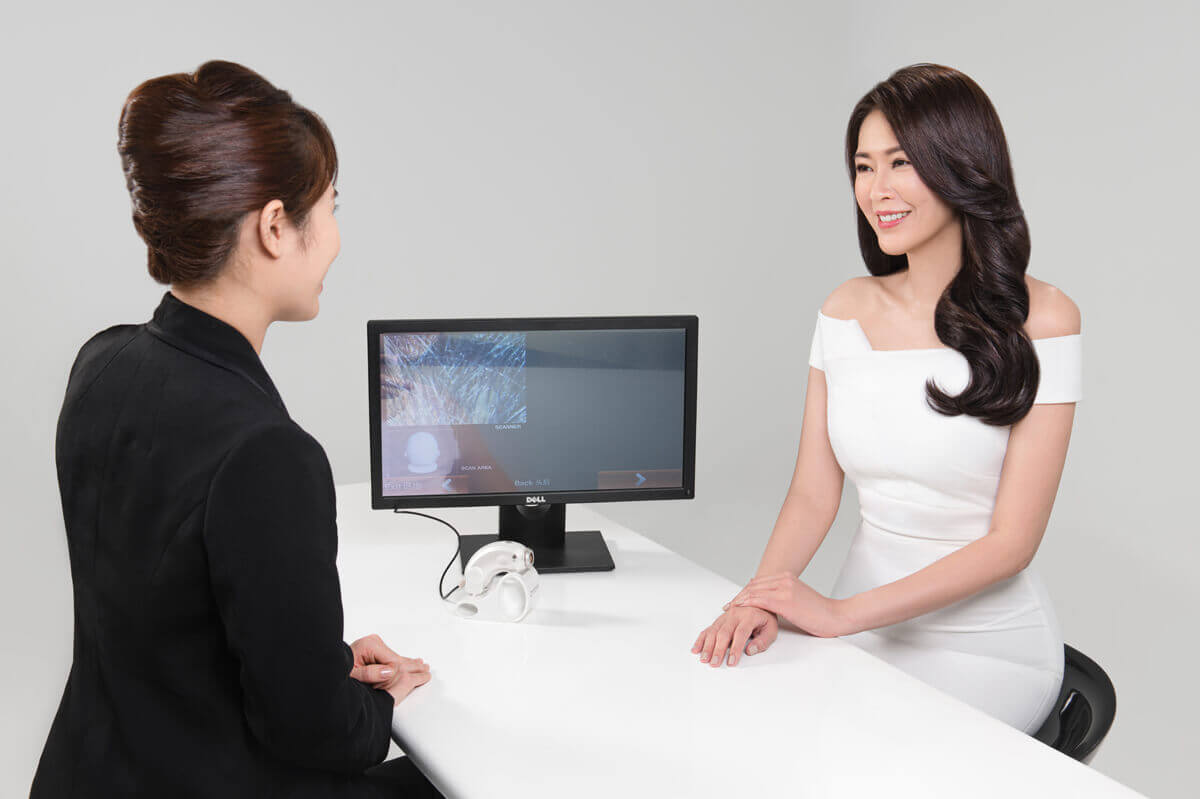
If your hair has begun to thin after you experience menopause, a professional scalp and hair assessment can identify what’s driving the change and outline the options suited to you.