How long before hair growth treatment shows results
Most hair growth treatments take time to show. For most people the first signs appear around three to six months, with fuller volume visible after nine to twelve months of consistent treatments. These, as with every treatment, is a range and individual results vary according to the severity of hair loss and how well your scalp responds.
Yun Nam’s Signature FASTGro™ treatment sets an expected timeline based on your personalised treatment plan and will monitor progress and adjust accordingly.
Internationally, Mayo Clinic advises that treatment usually takes at least six months to slow further loss and start regrowth, and a few months more before you can judge how well it’s working. Clinical and pharmacy sources put first regrowth at around three to six months and fuller results at nine to twelve. The takeaway: patience is part of the process, and no change in the first few weeks is not a sign of failure.
Why it takes time — your hair grows in cycles
Your hair doesn’t grow in a steady stream. Each follicle moves through a repeating life cycle, and a treatment can only influence it at the next stage. That’s why patience and consistent treatment is key.
The cycle runs through four stages, each on its own timescale:
-
Anagen – Active growth, when the hair lengthens — about two to eight years.
-
Catagen – A short transition, as growth slows — about four to six weeks.
-
Telogen – A resting phase, when the follicle pauses — about two to three months.
-
Exogen – Shedding, before the cycle restarts — about two to five months.
On average, scalp hair grows only about six inches — roughly fifteen centimetres — a year. New coverage is measured in months, not weeks, and a treatment works with the next turn of this cycle rather than overriding it.

What to expect, month by month
The pace differs from person to person, but it all starts with the same thing – identifying it early is the key to an effective treatment.
The first weeks: shedding and settling in
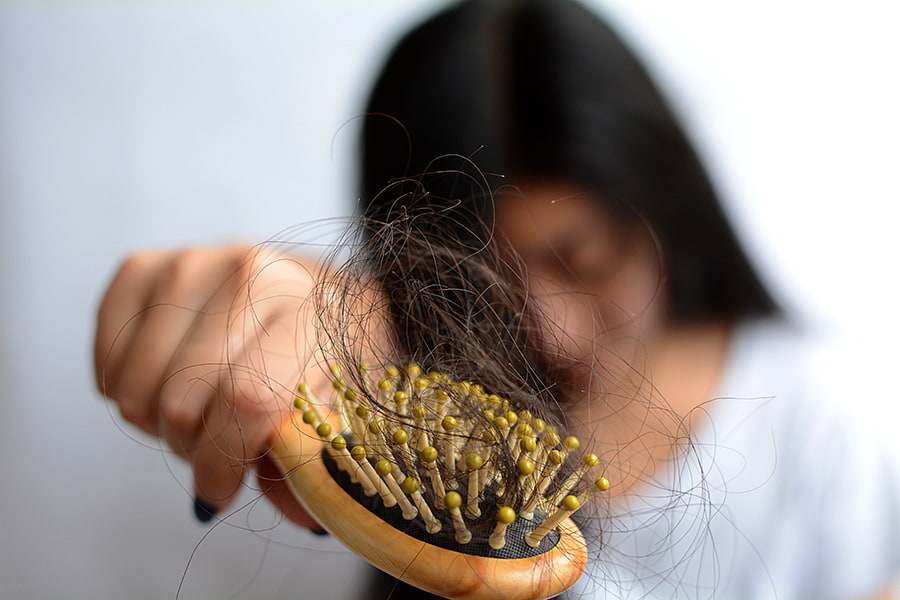
In roughly the first one to two months, you may notice a temporary increase in shedding — more hair on the pillow, or a clump of hair fall on the shower drain after a wash. It feels discouraging, but it’s often a normal part of the process as older hairs make way for new growth. If it’s your first time in a clinic setting, it helps to know what to expect at a first session.
Three to six months: the first regrowth
First visible regrowth usually appears around three to six months into a consistent treatment. The new hairs are fine and soft at first, then thicken over the following weeks. Take a photo under the same bathroom light every few weeks and compare — it’s far more reliable than a daily look in the mirror, where gradual change is almost impossible to see.
Six to twelve months: fuller coverage
Volume and coverage build most noticeably between six and twelve months. This is usually the stage when other people notice — the colleague who sees you every day, or family over a weekend meal — not just you. For some people, results keep improving beyond this point, depending on the cause and how the scalp responds.
What affects how quickly you see results
Two people on the same treatment can progress at very different speeds. A few things explain the gap:
-
The cause matters most. Pattern hair loss is usually permanent without treatment, while shedding from telogen effluvium — post-natal or stress-related loss — may start to recover on its own after about three to six months.
-
Consistency. Missed appointments or long gaps between treatments may disrupt the progress. Try to schedule a treatment at least once a week.
-
Severity and duration. More advanced or prolonged thinning usually takes longer to respond.
-
Age and general health. Overall condition and nutrition support the follicles as they recover.
Why staying consistent keeps your results
Most hair growth treatments like minoxidil require constant usage, or the effects will reverse. Yun Nam’s herbal treatments, however, don’t reverse when you stop — your results last, and continued care supports future growth.
In simpler terms: It’s easier to strengthen existing hair and prevent hair fall than to regrow hair that’s been lost. Committing to a treatment plan over months is better than starting a new one and abandoning it before your hair cycle has had time to show results.

The Singapore factor — heat, humidity and aircon
Your timeline doesn’t play out in a vacuum — it plays out in Singapore’s climate. Warm, humid days encourage the oil and sweat that can clog follicles and irritate the scalp, while long hours in air-conditioned offices and bedrooms dry it out. Move between the two several times a day, as most of us do, and your scalp takes a daily beating. A scalp that’s inflamed or congested is a poor environment for new growth, which is why a scalp-first approach treats the foundation before chasing the strand.
This is also where a herbal, drug-free approach comes into play. Rather than a lifelong medication, Yun Nam works to restore a healthy scalp environment so your hair can grow more optimally in local conditions. If you’re weighing that route, it’s worth understanding whether herbal hair loss treatments are safe for the scalp.
How your scalp condition shapes a realistic timeline
The ranges above describe the general pattern — they can’t tell you what to expect, because they don’t account for your specific scalp. This is where an assessment changes the picture.
A computerised scalp analysis can tell whether you’re dealing with pattern loss, a scalp condition like excess oil or dandruff, post-natal or menopausal shedding, or patchy loss — and each follows a different course.
Yun Nam Hair Care follows an assessment-led approach for exactly this reason. Its Signature FASTGro™ programme runs through four steps: a personal consultation, a computerised scalp analysis, a customised herbal treatment, and ongoing progress reviews. The method is built on the 3S effect — stimulate hair growth, stabilize the scalp environment, and strengthen the roots of both existing and new hair to reduce hair fall.
Yun Nam doesn’t have a fixed number of sessions or a guaranteed timeframe for FASTGro™ — and that’s the honest position, because a reliable timeline can only be set once your scalp and hair has actually been assessed. Confirm your own expected timeline at a consultation rather than relying on a figure from a general guide.
What to do if you’re not seeing results
If results are slow, don’t abandon the treatment first — check how consistently you’ve followed it. Missed appointments and long gaps between treatments are among the most common reasons progress stalls.
If you’ve stuck to the plan closely and several months have passed with little change, go back to your provider for a reassessment. A fresh hair and scalp analysis can show whether the plan needs adjusting, or whether an underlying cause was missed. Stopping treatment before the hair cycle has had time to progress risks throwing away a treatment that was just starting to work.
Key Takeaways
-
Most hair growth treatments show first results around three to six months, with fuller volume toward nine to twelve months.
-
Internationally, Mayo Clinic advises at least six months before regrowth begins, and a few more before results can be judged.
-
Hair grows in cycles, so treatment works with the next growth phase rather than producing an instant change.
-
A temporary rise in shedding in the first one to two months can be normal.
-
The root cause of your hair loss, its severity, treatment consistency, and your general health affect how fast you see results.
-
A hair and scalp analysis can only gauge a timeline but actual results will vary.
Frequently Asked Questions
How long does it take for hair growth treatments to work?
For most people, visible improvement appears around three to six months into consistent treatment, and fuller results build toward nine to twelve months. Mayo Clinic advises at least six months before regrowth begins. The exact pace depends on the cause of the loss and how your scalp responds.
What are the "big 3" for thinning hair?
A broad term for three treatments often grouped together for pattern loss: minoxidil, finasteride and a ketoconazole shampoo — mostly associated with male pattern loss. Note that all three are drug-based and ongoing. If you’d prefer a herbal, drug-free route, a hair and scalp assessment can tell you whether that suits your condition. Suitability and results vary, so get professional advice from specialists like Yun Nam Hair Care before starting anything.
Can hair grow back in two weeks?
No. Meaningful regrowth can’t happen in two weeks, because hair grows in cycles and treatments work over months. Scalp hair grows only about six inches — roughly fifteen centimetres — a year, so any change within two weeks isn’t regrowth from a treatment.
Can hair grow back after thinning?
Often, yes — though it depends on the cause. Thinning from telogen effluvium, such as post-natal or stress-related shedding, may start to recover after about six months. Pattern hair loss is usually permanent without treatment, which is why an accurate diagnosis comes before any expectation.
Get a timeline based on your own scalp
Rather than relying on a general estimate, a personalised consultation and in-depth hair analysis with Yun Nam Hair Care can set a realistic timeline for your hair condition. The consultants will assess your scalp and explain what Signature FASTGro™ can reasonably achieve for you.