


That familiar itch deserves a closer look
You have just washed your hair and stepped out for lunch, but your scalp is already itching and your fingertips feel greasy when you touch your roots. By evening, you are wondering whether the problem is sweat, your shampoo or something more.
If you are searching for help with an itchy scalp in Singapore, start with the pattern. Does it happen after washing, after exercise or after using a new product? Is there flaking, redness or hair fall too? These details can help you understand what may be triggering the itch before choosing a shampoo or scalp treatment.
An itchy scalp can have several causes, including dandruff, dryness, product residue and sensitivity to ingredients in hair products. These can feel similar, so noticing when the itch starts and whether it comes with flakes or redness helps guide the next step. Understanding the likely cause makes it easier to choose suitable care.
Why can your scalp itch even when it is clean?
Clean hair and a comfortable scalp are related, but they are not the same thing. Washing your hair removes sweat, excess oil and product residue from the hair and scalp surface. It cannot automatically resolve every skin condition or reaction to a product.
According to the American Academy of Dermatology’s guide to scalp itching, possible causes include dandruff and reactions to hair products. Shampoo left behind after rinsing may also irritate the scalp. That is why washing again with more product is not always the best next step.
Look at your whole routine. A newly introduced scalp serum, colour service or styling spray may be more relevant than how recently you showered. Make a note of changes rather than assuming your scalp is simply dirty.
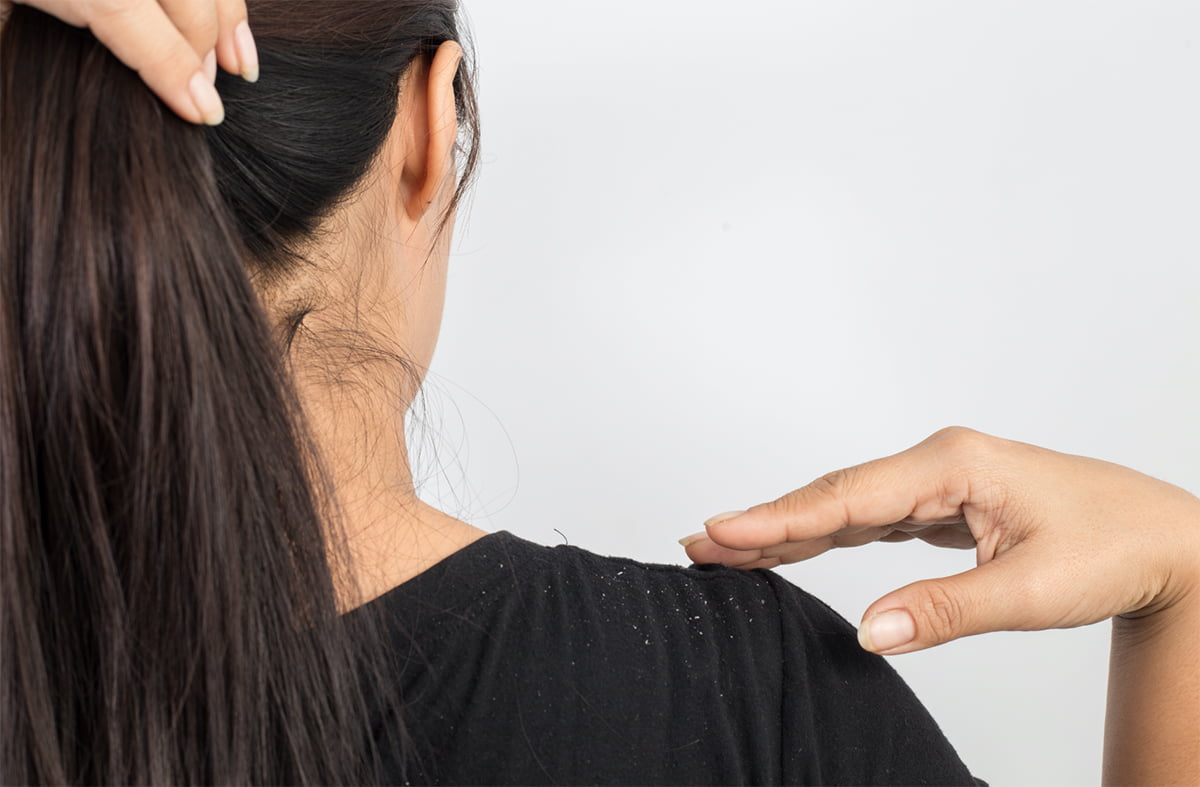
Three patterns worth noticing
1. Itching with visible flakes
Flakes can make you reach straight for an anti-dandruff product. Before doing so, notice whether your scalp also feels greasy, tight, sore or unusually sensitive. Flaking has several possible explanations, and appearance alone does not confirm a diagnosis.
Our guide to dandruff versus dry scalp explains the differences in more detail. If you use a dandruff shampoo, follow its directions, including where to apply it and how long to leave it on. Using it more often than directed is not a shortcut to a comfortable scalp.
2. Itching after a new product or colour service
Think back to what touched your scalp before the discomfort began. Products you rinse away still come into contact with your skin. A scalp product described as natural can also contain ingredients that do not suit you.
Stop using a suspected product if irritation develops, and keep its ingredient label. That information can help a healthcare professional assess a reaction. Do not keep testing it on an already uncomfortable scalp to see whether your skin gets used to it.
3. Itching after a busy, sweaty day
A lunchtime walk, gym session and journey home can leave you wanting to refresh your roots. Notice whether the discomfort improves after a gentle wash and thorough rinse, or whether it keeps returning regardless of your schedule.
Make your routine practical. If your scalp feels sweaty or oily after exercise, wash your hair afterwards with a suitable shampoo and rinse thoroughly. Repeatedly covering a sweaty scalp with layers of fragrance or dry shampoo may make it harder to work out what is bothering you.
A calmer routine to try
Start by simplifying. Continue using products that are suitable for your scalp, and pause new additions while you identify what triggers the itch. Changing shampoo, tonic and exfoliant at once makes it difficult to identify what helps and what does not.
-
Wash gently. Use your fingertips rather than your nails. You do not need to scrape the scalp to clean it.
-
Rinse thoroughly. Pay attention to the hairline, behind the ears and the back of the head, where product residue can be easily missed.
-
Follow each label. Leave-on and rinse-off products serve different purposes. More product or longer contact time is not automatically better.
-
Keep a short record. Note when the itch appears, what you used and whether there are visible changes.
For example, if your hairline starts itching after you use a new styling spray, note the product name and stop using it if irritation develops. Share this information during your consultation. It can help narrow down possible triggers and guide a more suitable care routine.
Does an itchy scalp mean you are losing hair?
Itching alone does not tell you why your hair is falling or whether you have a hair-loss condition. Finding loose strands while scratching or washing does not, by itself, show that itching caused the hair fall. Both symptoms should be considered together with any visible changes in your hair and scalp.
Pay attention to changes in coverage as well as the sensation. A widening parting, a new bare patch or hair that looks noticeably thinner deserves its own assessment. Avoid deciding that every change comes from oiliness or buildup.
If itching and hair fall appear together, explain both concerns at your appointment. Bring photographs taken in similar lighting and describe when each symptom started. The goal is to understand the whole picture, rather than treating the itch as proof of a particular type of hair loss.
When should you seek medical advice?
Arrange a GP or dermatologist review if the itch is persistent, keeps returning, disrupts sleep, or comes with painful skin, sores, discharge or patchy hair loss. A clinician can assess causes that need medical treatment. Seek urgent help for a severe reaction, especially facial swelling or breathing difficulty after a product.
A cosmetic scalp assessment can help you discuss visible scalp condition and everyday care. It does not replace medical diagnosis. Knowing which type of help you need makes your next step more useful.

Personalised hair and scalp care with Yun Nam
Yun Nam brings its Chinese herbal philosophy and personalised approach to hair and scalp care. A one-to-one consultation lets you explain your itching, washing habits and any accompanying hair fall, while computerised scalp analysis provides a closer view of visible scalp concerns. Together, these steps help guide a care programme suited to your needs. Explore Yun Nam’s hair and scalp treatments and ask which options are suitable for your current scalp condition.
Your consultant can explain whether a customised FASTGro™ herbal programme is suitable, what each step is intended to address, and how to care for your hair between visits. Share any sensitivity, recent colouring and existing scalp treatments so your routine can be considered as a whole. Follow-up reviews provide an opportunity to discuss your response and keep the care focused on your goals.
Key takeaways
-
Notice when the itch happens and what else changes alongside it.
-
Choose gentle, consistent care instead of repeatedly trying more potent cleansing products.
-
Persistent itching or itching with sores or patchy hair loss needs medical assessment.
-
Discuss scalp comfort and hair fall as separate concerns, even when they occur together.
Frequently asked questions
Should I wash my hair every day if my scalp itches?
There is no single schedule for everyone. Match washing to your scalp, hair type, activity and product instructions. If washing more often makes the discomfort worse, review the product and technique rather than continuing to increase the frequency.
Can I have an itchy scalp without dandruff?
Yes. Itching does not always come with visible flakes. Tell your healthcare professional about persistent discomfort even if your scalp looks normal to you.
Should I use a scalp scrub?
While it is tempting to scrub or scratch an itchy scalp, doing so may aggravate irritation and damage the skin. Use your fingertips gently when washing and avoid scraping the scalp with your nails or an abrasive scrub. First establish whether the concern is residue, product sensitivity or something that needs medical care.
What should I bring to a scalp consultation?
Bring your product names, a brief timeline and any photographs showing changes. Mention allergies, recent chemical services and prescribed scalp products so your routine can be discussed properly.
Give your scalp the right kind of attention
You do not have to guess your way through another shelf of products. Book a consultation with Yun Nam to discuss your scalp-care needs and build a routine you can follow with confidence.


