The earliest signs are easy to walk past
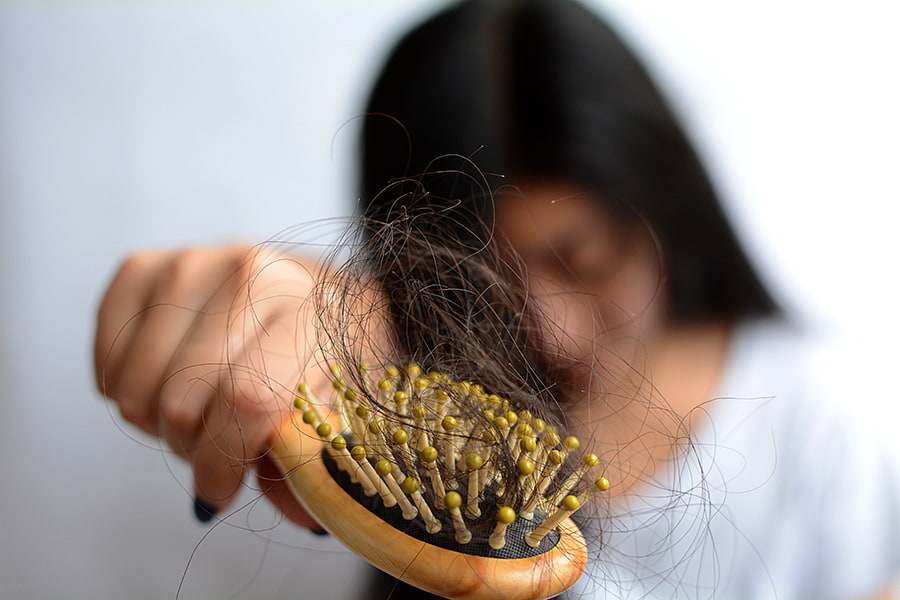
The earliest signs of hair loss are easy to miss. A hairline that’s crept back at the temples, a bit more scalp at the crown, a wider parting, finer strands, and more hair on the shower drain — on their own, each one is easy to brush off. Together, they’re the point where thinning is easiest to treat.
That’s worth catching, because hair that’s still thinning responds to care far better than hair that’s already gone. Once you can see the pattern, it’s worth understanding your options for professional hair loss treatment — ideally starting with a scalp assessment rather than a guess.
The five signs, one by one
1. A hairline creeping back at the temples
The first change is often a small retreat at the temples, which can slowly deepen into a faint M shape. It’s easy to miss because it happens over months, and the hair there is thin to begin with. The easiest check in Singapore: pull up an old IC or passport photo and compare it with a recent one. Your memory smooths over the change; a photo doesn’t.
2. More scalp showing at the crown
The crown sits at the back of your head, in a spot you rarely see directly — which is exactly why it’s overlooked. It often shows up in someone else’s photo first, or under the bright overhead lighting of an office or lift lobby. If you’ve just had a short NS or army-style cut, the crown is easier to see too. Ask someone to snap the back of your head, or use two mirrors at an angle.
3. A parting that looks wider
As the hair thins across the top, your parting slowly widens. At first it’s a matter of millimetres, so it feels like a vague impression rather than an obvious gap. Part your hair in the same place each time and photograph it — that turns the impression into something you can actually measure. If you wear a defined parting, this is often the first sign you’ll notice.
4. Strands that feel finer and softer
Early hair loss often starts with miniaturisation — affected follicles produce hairs that are gradually thinner, shorter and softer. Your total count may not drop much yet, so the hair just feels less substantial and doesn’t hold its style the way it used to. It’s subtle, and it’s easy to attribute it to a new shampoo or the humidity.
5. More hair in the drain and on the pillow
Some hair fall per day is normal. But if you start noticing an increase in shedding – more hair on your pillow, on the shower drain, on your comb – then perhaps you might want to get it checked out. A few strands of loose hair should not spark your worry, it’s an increase in shedding patterns that should trigger alarm bells.

How to tell early balding from normal shedding
Everyone sheds hair every day. It’s normal to lose around 50 to 100 hairs a day.
Here’re some ways to check if your hair fall is excessive:
-
Photograph your hairline, crown and parting under the same light — the same bathroom lamp works well — every two to three weeks, then compare across a couple of months, not day to day. Consistent framing is what makes small changes show up.
-
Comb gently front to back once per session and watch whether the amount is climbing steadily, rather than reacting to one stressful week (a big project, exams, a bout of illness).
-
Note the pattern, not the exact number. A clinician can do a hair-pull test and judge how much comes away — hard to gauge on your own.
For a closer comparison of everyday shedding against the kind that signals a problem, see normal daily hair fall versus a sign of real trouble.
Types of Hair Loss
The common patterns
Most early thinning falls into one of three recognised patterns. The most common in both men and women is androgenetic alopecia, the inherited form of pattern hair loss — a receding hairline and crown thinning in men, a widening part in women. Telogen effluvium is diffuse shedding across the whole scalp, typically following illness, childbirth, surgery or a sustained stressful stretch, and it usually settles once the trigger passes. Alopecia areata is different again: patchy loss in defined, coin-sized spots, autoimmune in origin.
What drives it
Genetics. The strongest single predictor. Pattern hair loss is inherited from either side of the family, and it determines both how early thinning starts and how far it progresses.
Age. Age doesn’t cause hair loss so much as set the window in which an inherited tendency shows itself. About a quarter of men notice the first signs before 21, and roughly half see some degree of loss by 50 — which is why thinning in your twenties is common rather than alarming.
Environment. Singapore’s heat and humidity mean more sweat, sebum and product buildup sitting on the scalp. That won’t cause pattern hair loss, but it does raise the risk of irritation, seborrhoeic dermatitis and folliculitis — and an inflamed scalp is a poorer growing environment.
Lifestyle. Chronic stress is the usual trigger behind telogen effluvium. Smoking has been linked in observational studies to earlier and more severe pattern loss. Poor sleep, crash dieting and low iron or protein intake all show up as contributing factors.
Early thinning in your twenties is common, not a crisis — and on its own, not a reason to panic.
When to arrange a scalp assessment in Singapore
If your hair thinning occurs suddenly, is accompanied by an itchy or inflamed scalp, and lasts longer than a week, it is best to have it assessed by a professional. A herbal, scalp-first specialist like Yun Nam can assess the scalp directly and tell you whether the follicles are still active, which determines what can be done next.
Bring the photos from your self-checks — they can help the examiner better understand your condition and more accurately depict how your hair has changed over time. Where you go matters too, and there’s more on that in how to choose a hair loss treatment clinic in Singapore.
Paying attention to early warning signs and treating hair loss early is key to an effective treatment with optimal results.

Key Takeaways
-
The earliest signs are subtle: a receding hairline at the temples, more scalp at the crown, a widening parting, finer strands, and slightly heavier shedding.
-
Losing 50 to 100 hairs a day is normal, so the trend over several weeks matters more than any single day.
-
Photos under the same light every few weeks reveal early thinning more reliably than the mirror — compared against an old IC photo.
-
Androgenetic alopecia is the most common cause in both men and women.
-
Sudden, patchy or persistent loss, or an inflamed scalp, warrants a professional check — start with a GP, polyclinic or scalp specialist like Yun Nam Hair Care.
-
Acting early keeps the widest range of options open, including a herbal, scalp-first route.
Frequently Asked Questions
How do I know if I’m starting to bald?
Look for the subtle signs together rather than in isolation: a hairline that’s edged back at the temples, scalp visible at the crown of your head, a widening parting, finer strands, and an increase in hair shedding. Photos taken under the same light every few weeks — compared against an old photo — show these changes more reliably than the mirror. Because daily shedding is normal, it’s the trend over time, not one heavy day, that points to early thinning.
Are men balding earlier these days?
Male pattern hair loss can begin young. About 25% of men notice the first signs of hair loss before 21, and about half of them have some hair loss by age 50.
Can catching hair loss early actually help?
Yes. Catching thinning early gives you the widest range of options, because follicles that are still active respond better than those already lost. Whether loss can be slowed or reversed depends on the cause, which is why an accurate diagnosis comes first. Early treatment improves your chances of better and faster hair regrowth.
What is stage 1 balding?
Stage 1 is the earliest point on the Hamilton-Norwood scale — the seven-stage system used to describe male pattern baldness. It’s described as little or no hair loss or hairline recession, effectively the baseline before visible thinning begins. The signs above tend to appear as hair loss moves beyond this first stage.
Not sure what your hair is telling you?
A professional hair assessment can identify what’s behind early thinning and confirm whether your follicles are still active, so as to better inform your treatment options.